
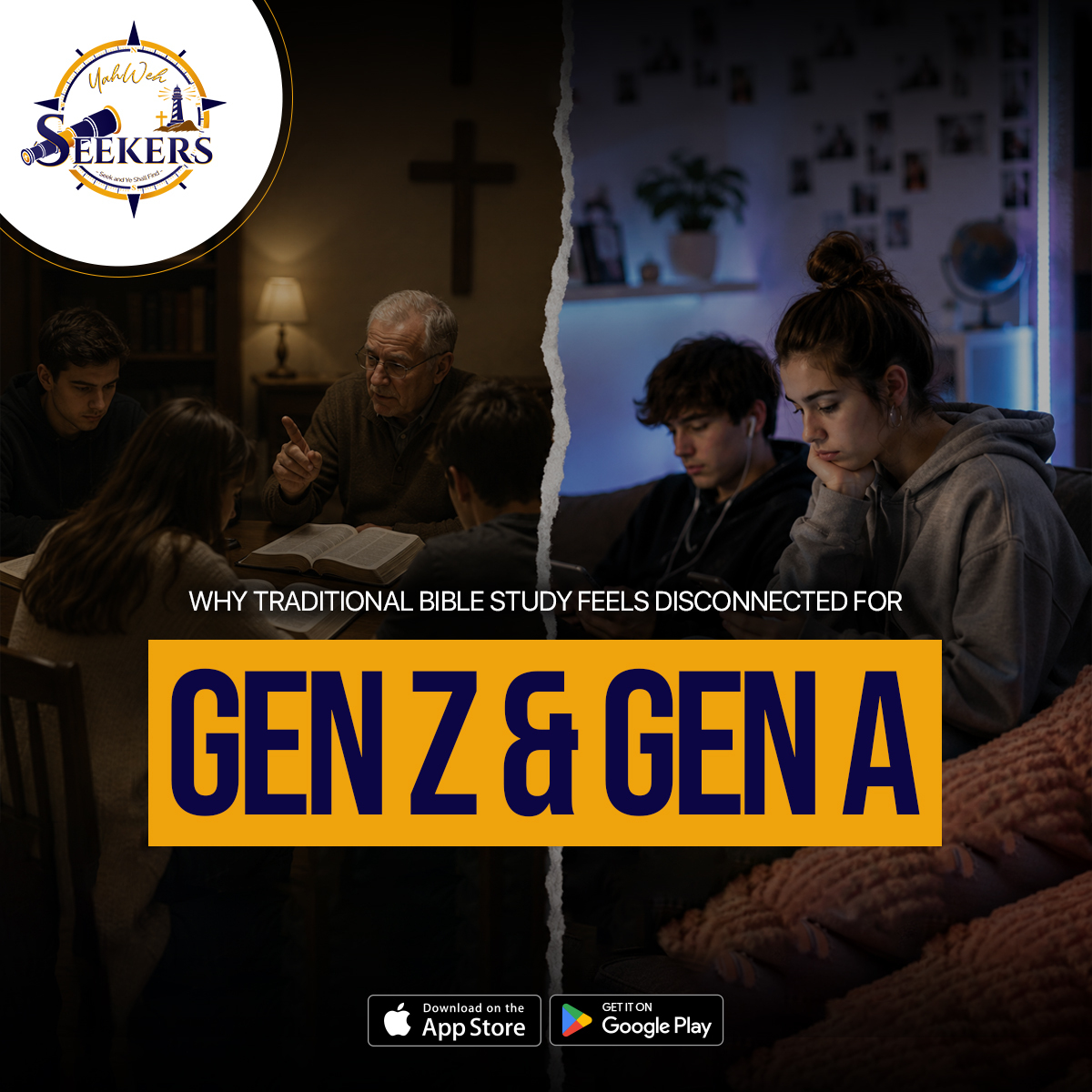
Every generation and every person approaches faith differently. For a long time, traditional bible studies have been about reading Scripture, attending church services, and taking part in group discussions. These practices are the basics of christianity and continue to play a vital role in spiritual formation.
However, the new generations, i.e., Gen Z and Gen A, are growing very differently than previous generations. They are digital natives, hands-on learners, and highly connected through technology. They interact differently, consume information in their own way, and often seek participation instead of just observing.
This does not mean that they don’t value faith. Mostly, it means they want deeper and more meaningful ways to experience it.
Understanding why traditional methods sometimes feel disconnected can be very beneficial for churches, parents, and the communities in creating better opportunities for young believers.
Understanding Gen Z and Gen Alpha
Gen Z and Gen A have never experienced the world without smartphones, streaming services, social media, and instant access to information. They have grown up studying and learning through interactive experiences. Whether it is educational apps, video content, online sessions, or gamified learning, engagement has become an expectation.
Also, this generation strongly emphasizes authenticity, purpose, community, and personal experiences. They often ask, What does religion say? And how does it apply to my life today?
That need creates an opportunity for churches and communities to convey religious teachings in ways that connect knowledge with action.
Information Alone Is Not Enough Anymore
Traditional religious studies mostly focus on listening to teachings, reading passages, and discussing concepts with the community. Although these practices are valuable, many young believers struggle when learning ends at information instead of application.
For example, reading about helping others is good, but actually helping and serving creates lasting memories, and learning about forgiveness is crucial, but actually doing it matters a lot.
For Gen Z and Gen A, experiences often teach lessons more effectively than lectures alone. So, when biblical teaching is linked with real-life action, scripture becomes personal rather than just theoretical.
Today’s Generation Learns Through Participation
One great thing about younger generations is their desire to participate and contribute, and not just observe. Whether in school, gaming, sports, or creative spaces, active involvement results in better engagement.
Faith is no different.
Interactive religious studies, scripture-based challenges, service projects, group discussions, and community activities help young believers become an active part of their religious journey.
This aligns with the examples our Prophets set for us through their actions. They did not just gather people to listen, but also invited them to walk with them, ask questions, watch miracles happen, serve others, and grow through experience.
Community Also Matters A Lot
Even with constant internet access and more digital connectivity than any previous generation, many young people report feeling disconnected.
It is so because traditional studies sometimes unintentionally focus on information while overlooking relationships. For young minds, meaningful relationships often become the basis for long-term growth. They desire spaces where they can freely ask honest questions, share struggles, celebrate success, and encourage one another.
In such a situation, authentic and strong christian communities come into play. They help transform religious study from an individual activity into a shared experience. So, when relationships grow along with biblical understanding, faith becomes stronger.
They Want To See Faith In Everyday Life
Today’s generations value authenticity. They quickly understand when beliefs and actions don’t align. Instead of just hearing about religious principles, they want to see those lived out consistently.
Mostly, the inspiration comes from people who show compassion, generosity, humility, integrity, and servant leadership. So, they respond to visible examples of faith in action.
Some examples include serving local communities, taking part in outreach projects, encouraging others, supporting religious initiatives, and applying Scripture in everyday life.
Final Takeaway
No matter what anyone says, most of Gen Z and Gen Alpha are not rejecting religion because they don’t like Scripture. Mostly, they are looking for ways to experience God’s word beyond reading and listening.
These young minds want faith that shapes everyday choices, communities that feel authentic, purpose that inspires action, and opportunities to live what they believe.
For a long time, churches have adapted their methods while remaining faithful to the religious message. Today’s generation presents another opportunity to do exactly that.
When biblical truth is connected with meaningful experiences, authentic relationships, and intentional followership, faith becomes stronger and richer. And that kind of faith continues to grow for a lifetime.